magnific_increase-the-size-of-the-_yi0aFqaPW9.png

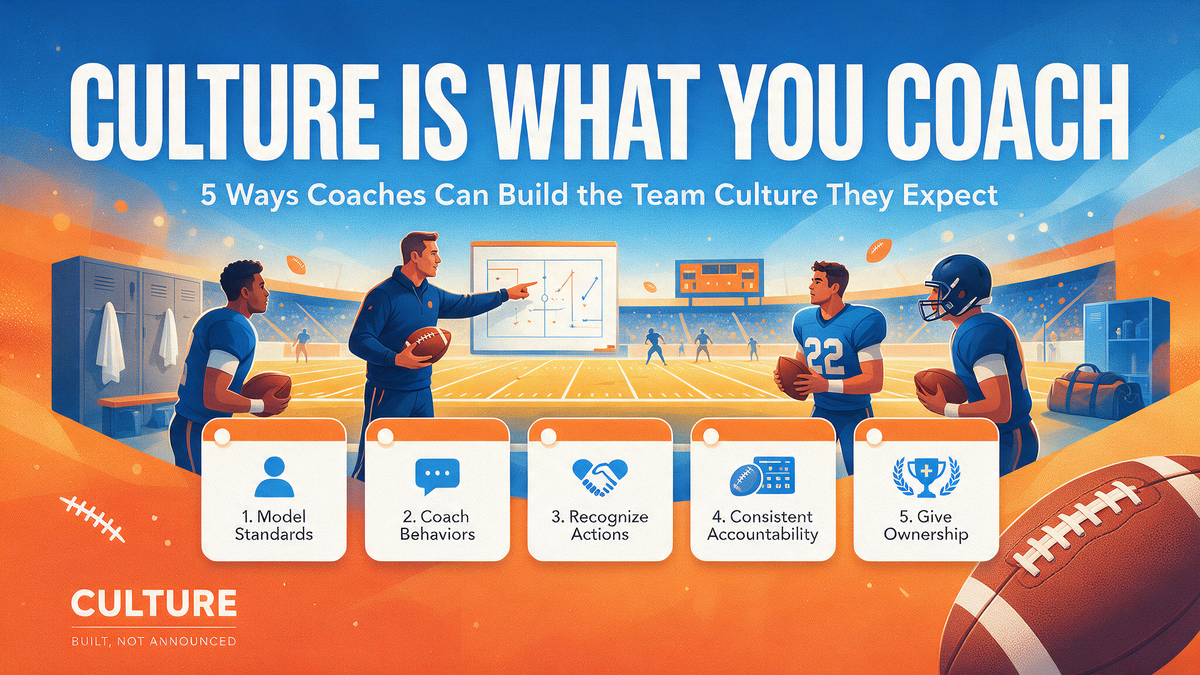
Culture Is What You Coach: 5 Ways Coaches Can Build the Team Culture They Expect

Every coach wants a great team culture.

We want athletes who compete, communicate, support their teammates, respond to adversity, and represent the program the right way. We talk about being disciplined. Being accountable. Putting the team first. Doing things the right way. But culture isn't something a coach can simply announce at the beginning of the season.

RELATED READ: Developing an Effective Team Culture

Culture must be coached.

It's built in the behaviors you recognize, the standards you enforce, the habits you model, and the responsibilities you eventually hand over to your athletes. The words on the locker-room wall might describe the culture you want, but what happens at practice every day determines the culture you actually have.

Here are five ways coaches can intentionally build the team culture they expect.

magnific_create-a-split-graphic-to_VXEzC6gMMU.png

1. Model the Standard

Just like coaches, athletes are always watching.

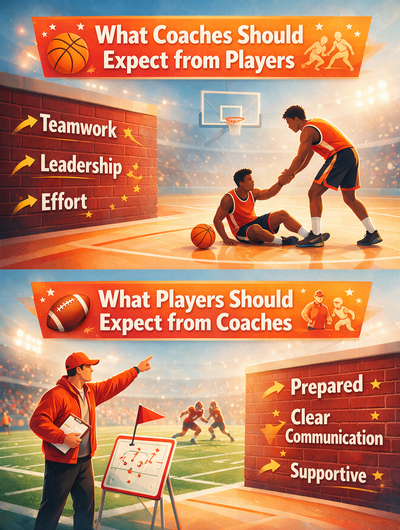
They notice how you respond when an official makes a call you disagree with. They see how you treat an athlete who's struggling. They hear how you talk about opponents. They notice whether you're prepared for practice, whether you're on time, and whether you hold yourself to the same standards you expect from them.

That's why culture starts with the coaching staff.

If we expect composure from the players, but lose ours when things go wrong, athletes notice. If we preach the importance of preparation, but show up disorganized, they notice that too. If we talk about respecting teammates but embarrass a player in front of the team, we've communicated something very different from what's written in our team values.

Don’t forget about parents and fans too – the team’s culture should be communicated and enforced off the playing field too. Remind parents that they also have to model the behaviors and standards, because athletes see and hear them also.

Why It Matters

Coaches establish what is normal within a program. The behaviors athletes see consistently modeled by the adults leading them become part of their understanding of how people in the program are expected to act. Culture becomes much easier to reinforce when coaches demonstrate the standards they're asking athletes to follow.

What Coaches Can Do

Choose three or four behaviors you want to define your program.

Maybe they're:

  • Compete on every rep.
  • Communicate with teammates.
  • Respond to mistakes with composure.
  • Treat everyone in the program with respect.

Then ask a harder question:

Does our coaching staff consistently demonstrate those same behaviors?

Coach's Challenge

At your next practice, evaluate yourself using the same standards you use to evaluate your players. Would you meet them?

magnific_create-an-image-of-a-coac_cpa2RIk0eP.png

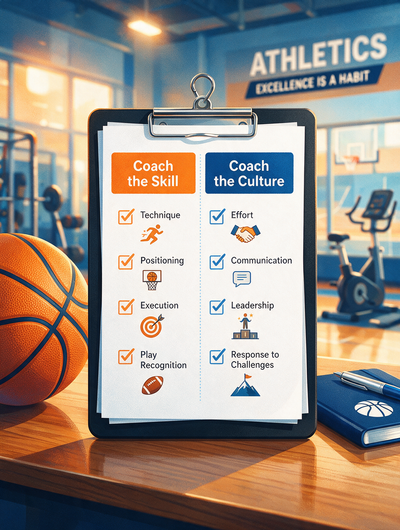
2. Coach the Behavior, Not Just the Skill

Coaches spend a lot of time correcting athletic performance. Footwork. Technique. Positioning. Decision-making. Execution.

But if we're serious about building culture, we also must coach the behaviors that surround and determine performance. Have you experienced any of these scenarios?

  • An athlete drops their head after making a mistake.
  • A teammate stays silent when someone makes a great play.
  • Players jog between drills.
  • Someone blames a teammate after a defensive breakdown.

Those moments may not show up in a box score, but they're opportunities to coach your culture.

Why It Matters

When coaches ignore behaviors that conflict with the team's standards, those behaviors can slowly become accepted. That doesn't mean stopping practice every thirty seconds for a lecture. Often, a short correction is enough.

  • “Pick your teammate up.”
  • “Next play.”
  • “Communicate.”
  • “That's not how we respond.”

The message is simple: It’s not just what we do, but how we do things that matters here.

What Coaches Can Do

Start evaluating two things during practice:

Performance: Did we execute correctly?

Behavior: Did we respond the way our team expects?

Great programs coach both. An athlete can make a mistake and still demonstrate great team culture by responding well, communicating, competing on the next play, and supporting teammates. Those behaviors deserve attention too.

Coach's Challenge

During your next practice, intentionally correct at least one culture behavior with the same clarity you would correct a technical mistake.

magnific_on-encouragement-make-the_ks9FBd616B.png

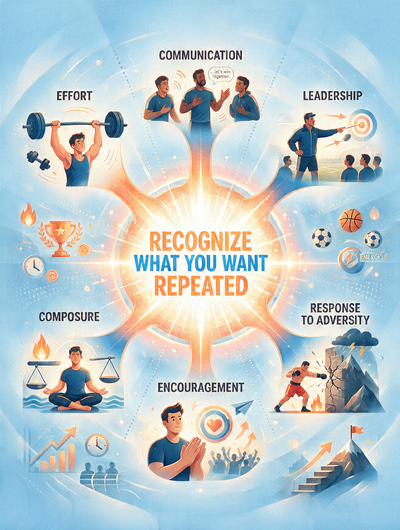
3. Recognize What You Want Repeated

Coaches are usually very good at spotting mistakes. Sometimes we're less intentional about recognizing the moments when athletes demonstrate exactly what we're trying to build.

  • A player sprints over to help a teammate off the floor.
  • Someone who's normally quiet becomes more vocal.
  • A starter celebrates a teammate's success from the bench.
  • An athlete makes a mistake and immediately responds with a great next play.

Those moments matter. When you see your culture happening and growing, point it out and celebrate it.

Why It Matters

Recognition helps athletes understand that team standards aren't just slogans - they're observable behaviors.

Instead of simply saying, “We need better leadership,” show athletes what leadership looks like when someone demonstrates it.

“That's exactly what we're talking about. The team was struggling, you stepped in to get them refocused, and we made the next play.”

Now everyone knows what the standard looks like in action.

What Coaches Can Do

Try to make praise specific.

Instead of:

“Good job.”

Try:

“I love how you communicated through that entire possession.”

Instead of:

“Great practice.”

Try:

“Our energy changed when you guys started encouraging each other during that drill.”

Specific recognition tells athletes what they did right and what you'd like to see repeated.

Coach's Challenge

At the end of your next practice, recognize one athlete for something that contributed specifically to your team culture rather than athletic performance.

magnific_remove-the-nike-logo-from_dtbOAIrXSL.png

4. Make Accountability Consistent

Standards only become culture when they apply consistently. That's easy when everything is going well. It's harder when enforcing the standard means correcting your best player. Or when you're losing. Or when enforcing a rule makes your job more difficult.

Athletes notice those moments.

If one player can ignore a standard because they're talented enough, the team quickly learns that the standard isn't really the standard - it's a suggestion.

Why It Matters

Accountability and positive coaching aren't opposites. As we discussed last month, positive coaching doesn't mean lowering expectations. Coaches can be supportive while still being clear when an athlete isn't meeting the team's standard.

Consistency actually makes accountability easier because athletes understand what is expected and know that expectations don't change based on the player, the situation, or the scoreboard.

What Coaches Can Do

Before the season - or before problems arise - decide which standards are truly non-negotiable. Then apply them as consistently as possible.

That doesn't mean every situation requires the same consequence. Context matters and coaching still requires judgment.

But the standard itself shouldn't depend on who's involved.

Coach's Challenge

Think about the standards you enforce most often. Now ask yourself:

Would I handle this the same way if it were my best player?

If the answer is no, your athletes probably already know it.

October 26 Player ownership.png

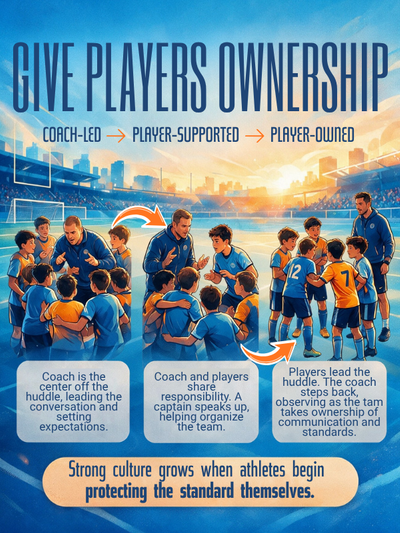
5. Give Players Ownership

One of the best signs of a strong team culture is when the coach doesn't have to enforce everything. Players begin doing it themselves.

  • They communicate the standard to each other.
  • They encourage teammates, not blame them.
  • They address poor effort.
  • They organize themselves.
  • They recognize when the team's energy isn't where it needs to be and change it.

That's when culture begins moving from something the coaching staff teaches to something the team owns.

Why It Matters

Coaches will always influence team culture, but athletes live inside that culture every day. Giving players appropriate opportunities to lead can create greater ownership of the standards they're being asked to uphold.

That doesn't mean coaches give up leadership - it means we create opportunities for athletes to practice it.

What Coaches Can Do

Ownership can start small. Ask players to help establish team expectations. Let captains lead part of a warm-up. Have veteran players help younger teammates understand program expectations. Ask the team to evaluate itself after a practice instead of immediately providing every answer.

The goal isn't to remove the coach's voice. It's to help athletes develop their own.

Coach's Challenge

At your next practice, identify one responsibility you normally control that could appropriately be handed to your athletes. Give them the opportunity to lead it.

Your Culture Is Already Being Built

Every team has a culture. The question is whether you're building it intentionally.

It's created in hundreds of small moments throughout a season: how coaches respond to mistakes, what gets praised, what gets corrected, what gets ignored, how teammates treat each other, and what happens when the team faces adversity.

Your uniforms can show people who your team is.

Your culture shows them what your team stands for.

So define the standard.

  • Model it.
  • Coach it.
  • Recognize it.
  • Protect it.

And eventually, give your athletes enough ownership that they begin protecting it too.

Because the strongest team cultures aren't simply created by coaches. They're carried by everyone in the program.