September Blog Header Graphic.png

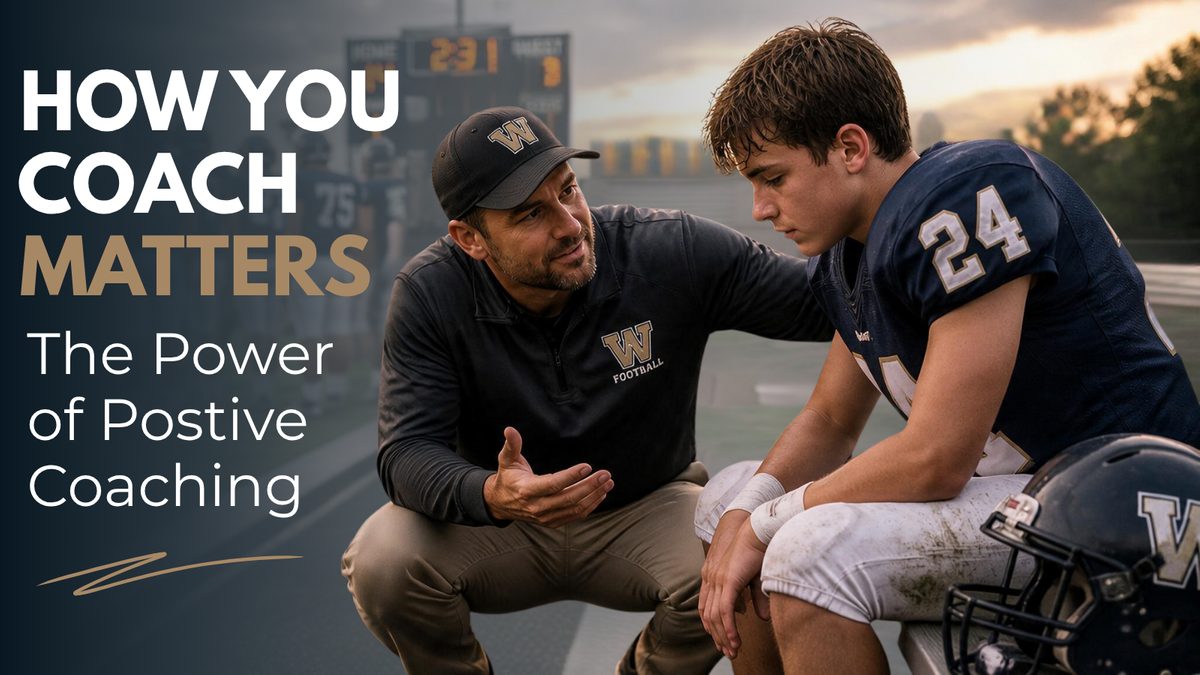
How You Coach Matters

The Power of Positive Coaching

Every coach spends time developing practice plans. We study strategy. We organize drills. We evaluate opponents. We think about player development, game management, and preparing our teams for competition. Those things matter.

But one of the most powerful tools a coach has isn't found on a clipboard, in a playbook, or the whistle around their neck.

It's the way they speak to their athletes every single day.

Long after athletes forget the score of a game or the outcome of a season, they often remember how a coach made them feel. They remember whether they felt trusted, challenged, encouraged, or supported.

That does not mean that great coaches never correct mistakes or demand excellence. In fact, the best coaches often hold the highest standards on and off the field. However, the difference is how they deliver those expectations. Positive coaching isn't about lowering the bar. It's about making athletes believe they can reach it.

RELATED READ: The Power of Positive
magnific_update-img1-in-the-new-si_796ERCOJAL.png

Coaching Is About More Than Wins

Success in sports is often measured by wins and losses, and rightfully so, it is why we play the game. But coaching has always been about something bigger.

Every practice is an opportunity to teach determination, accountability, teamwork, discipline, confidence, and respect. Those lessons stay with athletes long after their playing careers end and translate into the men and women they will become in their personal and professional lives. These supportive relationships help young people develop resilience.

Research from the Positive Coaching Alliance consistently emphasizes that youth and school sports are most impactful when coaches focus on both performance and personal development—not one at the expense of the other.

Why It Matters

Athletes spend a significant number of hours each year with their coaches. Those interactions influence not only performance, but also confidence, motivation, and enjoyment of the sport.

Practical Takeaway

Before each practice, ask yourself:

"What do I want my athletes to remember about today besides what we worked on?"

Coach's Challenge

Choose one non-skill lesson—such as communication, resilience, or encouragement—and intentionally reinforce it throughout practice.

Blog and Newsletter Graphics Style comp.png

Positive Doesn't Mean Passive

One of the biggest misconceptions about positive coaching is that it means avoiding criticism or not holding players accountable.

It doesn't.

Great coaches still correct mistakes. They still expect effort. They still hold athletes to a set of standards and actions.

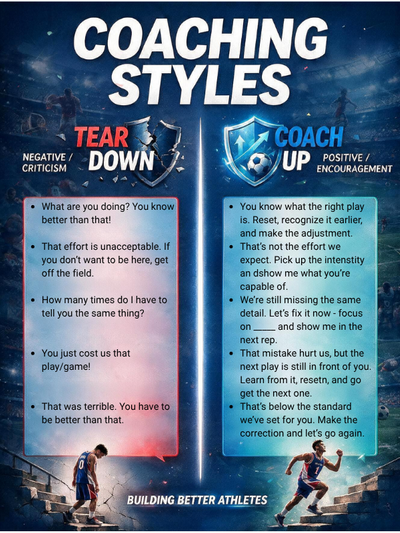
The difference is that accountability is delivered in a way that teaches rather than tears down. Athletes perform best when they understand that mistakes are opportunities to improve—not evidence that they don't belong. Tearing down a player because of poor performance or incorrect decisions only degrades their confidence and ability to perform in the future.

Why It Matters

Fear may produce short-term compliance, but trust creates long-term growth and success.

Practical Takeaway

When correcting a mistake, pair the correction with a clear path forward.

Instead of:

"That wasn't good enough."

Try:

"Here's what I want you to do differently next time."

Coach's Challenge

Replace one purely negative correction this week with instruction that gives the athlete a clear next step.

magnific_have-the-players-in-the-b_mEQK1vthJQ.png

Your Athletes Borrow Your Confidence

Your Athletes Borrow Your Confidence

There is a story an elder is teaching a young child about the two wolves that are in battle inside us all. The first wolf is strength, perseverance, and confidence. The second wolf is hesitancy, fear, and pessimism. The young boy asks the elder, “How do you know which one will win?” The elder says, “Whichever one you feed.”

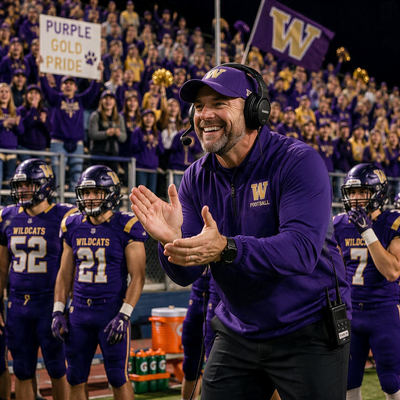
All athlete experience doubt. The coach often becomes the person who can determine whether an athlete chooses to feed into the hesitancy or overcome it. Athletes frequently see themselves through the eyes of the adults they trust.

When coaches consistently communicate belief, athletes begin believing in themselves.

Why It Matters

Confidence is built through repeated experiences of encouragement combined with challenge and success.

Practical Takeaway

Look for opportunities to praise effort, decision-making, improvement, and leadership—not just outcomes.

Coach's Challenge

Identify one athlete who needs encouragement this week and intentionally recognize something they've improved.

magnific_change-the-banners-on-the_Cq5jZmWEEy.png

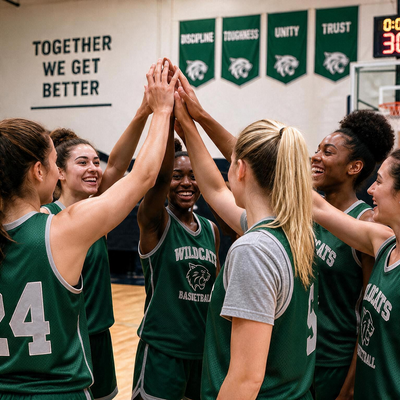
The Best Teams Celebrate Growth

Championship teams are rarely built overnight. They're built one improvement at a time. Programs that focus only on results often miss the small victories that create long-term success.

Celebrate:

  • improved effort
  • better communication
  • teammate support
  • resilience
  • leadership
  • consistency

Those habits eventually become winning habits.

Why It Matters

Taking the time to recognize progress helps athletes stay motivated even when immediate results aren't visible.

Practical Takeaway

Many coaches have a mantra about growing at every practice (e.g. get 1% better everyday). Take the time at the end of each practice and call out one example of growth—not just great performance.

Coach's Challenge

Ask your athletes to nominate a teammate who demonstrated leadership or improvement that day.

RELATED READ: The Power of Positive Feedback
magnific_remove-the-nike-swoosh-fr_ksgOIxU16B.png

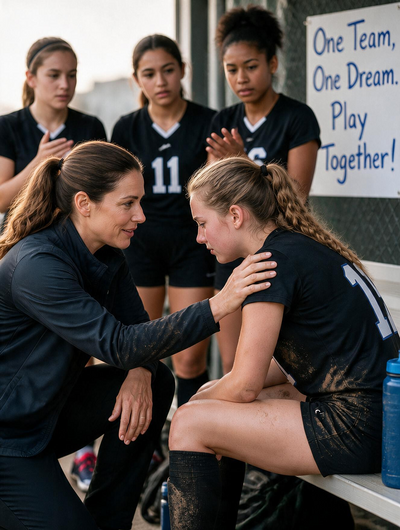
Parents and Coaches Are on the Same Team

Strong sports programs are built around a sense of community, and that starts when coaches, families, athletes, and supporters understand that they're working toward the same goal.. Parents want to know their children are valued and supported. Coaches want athletes who are resilient and committed.

Those goals aren't in conflict.

Open communication, mutual respect, and shared expectations create better experiences for everyone involved.

Why It Matters

Athletes thrive when the important adults in their lives are working together rather than pulling in different directions.

Practical Takeaway

Schedule a team parent meeting before the season begins or early in the season so families understand what your program values beyond wins. Clearly state your expectations for parents at this time too.

Coach's Challenge

Share three core values with parents before your next season begins.

magnific_coach-is-wearing-black-jo_TdBh3g9VNR.png

The Legacy of a Coach

Years from now, very few athletes will remember every score. Many won't remember every championship, especially from their young seasons.

But they'll remember how a coach made them feel. They'll remember whether someone believed in them. Whether someone challenged them. Whether someone cared.

Every practice is an opportunity to leave that kind of legacy.

As coaches ourselves, we have often stated that we want to win, winning is where the fun is. But we’d much rather be remembered for having an impact and be invited to our athlete’s graduation or wedding years from now.

Why It Matters

Great coaching isn't measured only by trophies. It's measured by the lives it influences.

Practical Takeaway

Create a list of ways you want to be remembered as a coach by your athletes.

Coach's Challenge

Before your next practice, ask yourself:

"If this were the only practice this athlete ever had with me, what would I want them to remember?"

Final Thoughts

As coaches, we all want to win. But if we're fortunate, we'll do something even more meaningful.

We'll help young people become more confident, resilient, respectful, and prepared for life beyond sports.

The words we choose matter. The standards we set matter. The relationships we build matter.

Positive coaching isn't about being soft. It's about creating an environment where athletes know they're supported, challenged, and capable of becoming their very best.

Because the most powerful coaching tool isn't on your clipboard or play sheet. It's in your words.